

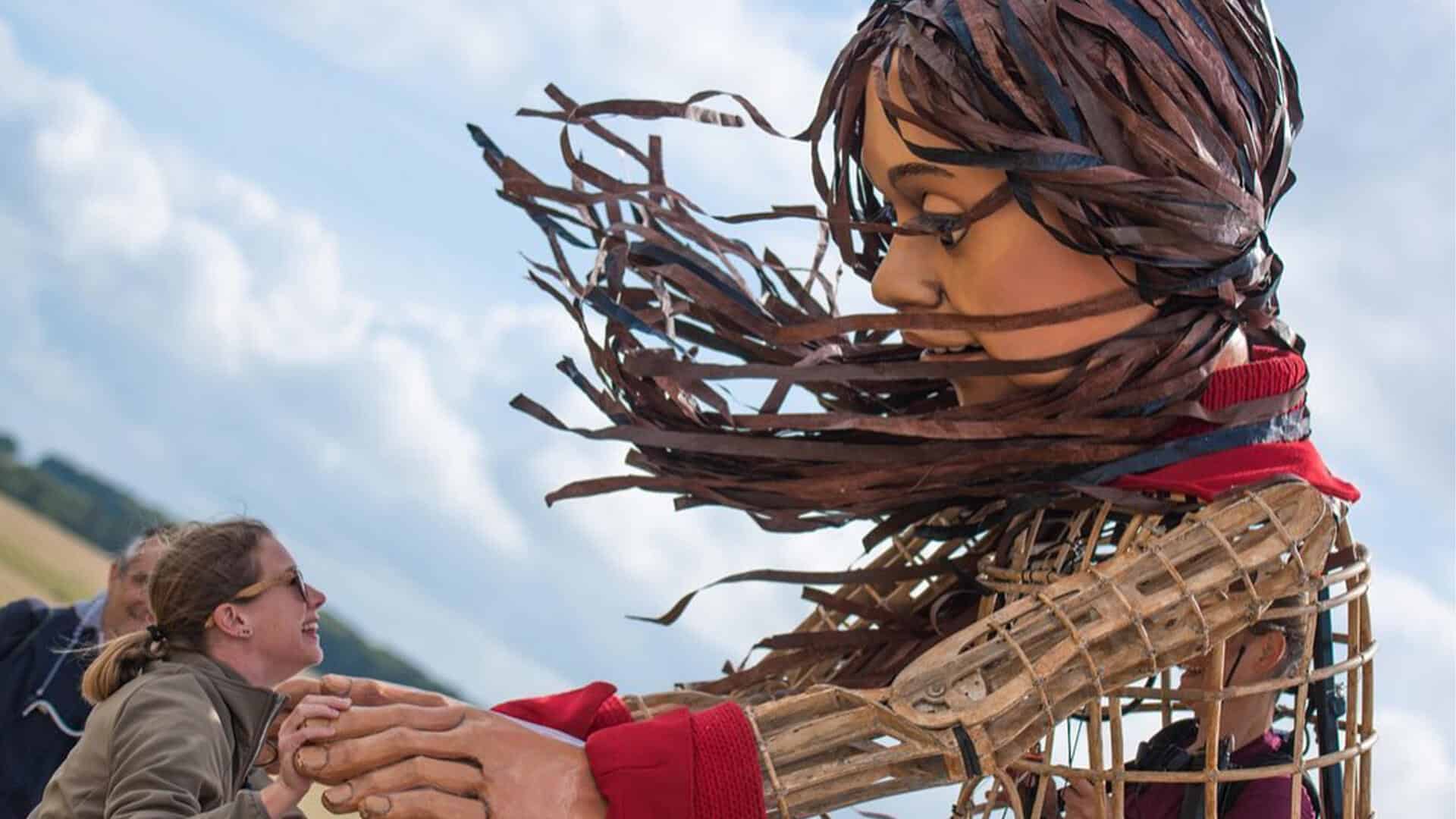
Puppetry has long been a tool for storytelling, education, and entertainment, but it has also played a crucial role in political protest and social activism.
In the United States, puppet theater has been a powerful medium to challenge authority, expose injustice, and inspire change. Whether through large-scale street performances, shadow puppetry, or intricate marionettes, puppet artists have found creative ways to engage audiences and provoke thought.
In this post, I’ll explore the history of political puppetry in America, from its early influences to contemporary collectives such as Bread and Puppet Theater, Paperhand Puppet Project, All the Saints Theater Company, Great Small Works, and Boxcutter Collective—each of which, as of this writing, continues to use puppetry as a means of resistance and social commentary.
The Roots of Protest Puppetry in America
Political puppetry has deep roots in global traditions. Throughout history, puppets have been used to satirize rulers, critique the powerful, and present alternative perspectives to mainstream narratives. In the 20th century, American puppeteers began to adopt and expand on these traditions, merging folk theater with political activism.
During the Great Depression, puppet performances communicated socialist and labor movements’ messages, often offering a voice to the working class. Marionette and hand puppet performances were featured in union rallies and strikes, illustrating issues of economic disparity and workers’ rights.
By the 1960s and 1970s, puppetry became an integral part of the countercultural movement, as artists and activists turned to this visual art form to engage in civil rights, environmental, and anti-war protests. Among the most significant players in this movement was Bread and Puppet Theater, a Vermont-based collective that remains one of the most recognized political puppet groups in the world today.
Bread and Puppet Theater: The Pioneer of American Protest Puppetry
Founded in 1963 by German artist Peter Schumann, Bread and Puppet Theater is one of the most influential political puppetry groups in the United States. Initially based in New York City before relocating to Glover, Vermont, Bread and Puppet became famous for its massive papier-mâché puppets, street performances, and unwavering commitment to radical activism.
During the Vietnam War, Bread and Puppet created large-scale puppet demonstrations that portrayed the horrors of war and the suffering of Vietnamese civilians. Their signature style—towering puppets with exaggerated, solemn expressions—became a striking visual representation of anti-war sentiment, often appearing in significant protests and marches.
The company also hosted the Domestic Resurrection Circus, a multi-day festival combining puppet shows, political theater, and community gatherings. Though it ended in 1998, the festival was instrumental in spreading the idea that art could be a political tool and that puppetry could reach people in ways that speeches and pamphlets could not.
One of Bread and Puppet’s defining principles is that theater should be as essential to life as bread, so they historically offered fresh-baked bread to audience members before performances. This practice symbolizes the accessibility of art and the idea that creativity and nourishment should be shared freely.
Today, Bread and Puppet continues to be an active voice in protests, using their giant puppets in demonstrations for climate justice, workers’ rights, and anti-capitalist movements.
Puppetry has long been a powerful medium for political expression, and its role in the 1999 Seattle World Trade Organization (WTO) protests—often referred to as the “Battle of Seattle”—is a testament to its impact. The use of large-scale puppets and street theater during these demonstrations captured public attention and influenced the nature of protests in the United States thereafter.
Bread and Puppet Theater’s Influence on the 1999 Seattle WTO Protests
While the Bread and Puppet Theater was not directly involved in the 1999 Seattle WTO protests, its legacy and methods significantly influenced the artistic activism displayed during the events. Established in the 1960s, Bread and Puppet Theater pioneered large-scale puppetry in protests, setting a precedent for integrating art into activism. Their approach inspired groups like Art and Revolution, which played a pivotal role in organizing the creative aspects of the Seattle demonstrations. Art and Revolution, influenced by Bread and Puppet’s techniques, utilized giant puppets and street theater to convey the dangers of the WTO’s environmental and societal policies.
These artistic elements were prominent during the Seattle protests. Protesters used giant papier-mâché puppets to represent various themes and issues, adding a visual and theatrical dimension to the demonstrations. This form of expression attracted media attention and engaged the public in a dialogue about the complexities of globalization and trade policies.
The Impact on Future Protests in America
Integrating puppetry and street theater in the Seattle WTO protests marked a significant shift in protest culture in the United States. This creative approach, often called “tactical frivolity,” combined art with activism to challenge authority and convey profound political messages through humor and satire.
The success of these methods in Seattle had lasting effects:
- Inspiration for Future Movements: The use of art in protests inspired subsequent movements to incorporate creative elements into their demonstrations, recognizing the power of visual storytelling in capturing public attention and conveying complex messages.
- Formation of Art Collectives: The period following the Seattle protests saw the emergence of numerous art collectives dedicated to activism, further embedding artistic expression into the fabric of social and political movements.
The legacy of Bread and Puppet Theater’s innovative approach to activism through puppetry and the subsequent adoption of these methods in the Seattle WTO protests have had a profound and lasting impact on protest culture in America, demonstrating the enduring power of art in effecting social and political change.
Paperhand Puppet Project: North Carolina’s Artistic Activists
Founded in 1998 by Donovan Zimmerman and Jan Burger, Paperhand Puppet Project (previously known as Paperhand Puppet Intervention) is another powerhouse in protest puppetry. Based in Saxapahaw, North Carolina, this collective uses giant puppets, masks, and shadow performances to tell stories about environmental justice, corporate greed, and social change.
Which is more radical? To protect and defend the land and water or to poison and destroy it with no thought of the future? I choose and strive to be radically aware of how my actions affect the world and others. I choose to be “solutionary” and not apathetic. The status quo has always looked to me like inequity, oppression, devastation, and violence. I’ve never been able to accept that. So, we RESIST! That is where the Intervention comes in. Imagine a giant papier-mâché hand reaching down from a cardboard cloud and giving us all a non-violent but robust whack that says, “Wake up!* Art is an act of resistance from the start. We hope to carry that torch into a brighter future. — Donovan Zimmerman
Paperhand’s work is deeply rooted in community engagement. Its annual performances at Chapel Hill’s Forest Theatre have become a staple of North Carolina’s artistic scene. Unlike puppet groups focusing exclusively on political messaging, Paperhand balances activism with whimsical storytelling, drawing inspiration from mythology, folklore, and the natural world.
One of their recurring themes is humankind’s relationship with nature. They urge audiences to reflect on environmental issues and their responsibilities. Over the years, they have created pieces about climate change, Indigenous rights, and biodiversity loss, often collaborating with local musicians to create immersive, multi-sensory experiences.
Their parades and street performances also serve as protest tools, transforming public spaces into stages for activism. Whether marching for environmental justice or raising awareness about social inequities, the Paperhand Puppet Project remains dedicated to the belief that art can inspire action.
All the Saints Theater Company: Puppetry as Political Pageantry
Richmond, Virginia, is home to All the Saints Theater Company, a politically engaged puppet troupe founded by Lily Lamberta. This collective specializes in parade-style puppetry, combining street performances with activist movements to support causes such as workers’ rights, LGBTQ+ rights, and environmental activism.
All the Saints is perhaps best known for its large-scale puppet processions, which take place during protests, community celebrations, and events like May Day marches and anti-war rallies. Their work is influenced by mummers’ plays and folk performance traditions, using elaborate masks and towering puppets to create striking visual spectacles.
In addition to its protest work, the group also stages interactive street theater productions, often tackling oppression, justice, and resilience themes. Like Bread and Puppet, All the Saints emphasizes the accessibility of performance art, ensuring that puppetry remains an inclusive and community-driven practice.
Great Small Works: Reviving Toy Theater for Protest
While many puppet collectives rely on grand-scale performances, Great Small Works takes a different approach—reviving the 19th-century tradition of “toy theater” to make powerful political statements.
Based in Brooklyn, New York, Great Small Works was founded in 1995 and focuses on using intimate, small-scale puppetry to discuss issues such as gentrification, immigration, and global conflicts. Their work is often performed at festivals, activist gatherings, and street protests, blending puppetry with live music and spoken-word narration.
Great Small Works is also known for its “Spaghetti Dinner” series. This ongoing performance event brings together artists, activists, and community members to engage in creative dialogue about pressing social issues. Through humor, satire, and historical storytelling, the company encourages audiences to rethink power structures and their roles within them.
Boxcutter Collective: A New Generation of Radical Puppeteers
Emerging from the legacy of Bread and Puppet, Boxcutter Collective is a Brooklyn-based puppet theater group that continues the tradition of using puppetry as a means of political resistance. Composed of former Bread and Puppet members, Boxcutter Collective focuses on satirical, anti-capitalist, and anti-authoritarian performances.
Their work often addresses corporate greed, state violence, and climate destruction, using hand-crafted puppets and props to create performances that blend dark humor with pointed political critique.
Why Puppetry Works as Protest
Puppetry remains an effective tool for activism because it combines artistic expression, public engagement, and visual storytelling to convey powerful messages in a way that words alone cannot. Using large-scale puppets in demonstrations transforms protests into living theater, making them more memorable, media-friendly, and emotionally compelling.
Creates Powerful Visuals
One of the greatest strengths of puppetry in protests is its ability to create striking, larger-than-life imagery that immediately captures attention. In a sea of signs and banners, a towering puppet depicting an oppressive figure or an exaggerated symbol of justice stands out, drawing both media coverage and public curiosity.
- At the Battle of Seattle (1999 WTO protests), giant puppets represented corporate greed and environmental destruction, visually reinforcing the protesters’ message.
- Large-scale puppets help simplify complex issues, turning abstract policies (like trade agreements or climate change) into tangible, relatable visuals that the public can easily understand.
- Because of their height and scale, puppets are visible even from a distance, ensuring messages remain clear and impactful even in large crowds.
This visual dominance makes puppets an essential storytelling device in movements that seek to disrupt the status quo and leave a lasting impression.
Engages Audiences Emotionally
Puppetry is a profoundly expressive art form that can evoke strong emotional responses from both participants and spectators. Unlike speeches or pamphlets, which rely on logic and rhetoric, puppets tap into the primal power of storytelling, character, and movement to engage audiences on a visceral level.
- Giant puppets with exaggerated facial expressions can convey sadness, fear, anger, or hope more effectively than a static sign.
- Puppets often depict marginalized voices—whether environmental symbols, working-class figures, or historical icons—giving a tangible presence to those who are frequently ignored or erased in mainstream discourse.
- Because puppets are inherently non-threatening and whimsical, they can disarm hostility, making it harder for opponents to dismiss the message outright.
When people connect emotionally to a protest, they are more likely to remember it and feel personally invested in the cause, leading to stronger solidarity and increased activism.
Makes Protest Playful Yet Serious
One of the unique aspects of puppetry in activism is its ability to balance playfulness with serious political critique. Puppets introduce a sense of spectacle, humor, and theatricality into protests, making them more engaging and participatory. However, this does not mean the issues being addressed are trivialized—instead, humor and satire are used as powerful tools to expose injustice and challenge power structures.
- Bread and Puppet Theater has mastered this technique, using oversized puppets in darkly comedic performances that critique war, capitalism, and government corruption.
- The WTO protests in Seattle saw protestors dressed as CEOs with grotesque puppet heads, ridiculing corporate interests in a way that was both entertaining and thought-provoking.
- Tactical frivolity, a protest strategy that blends absurdity with activism, often relies on puppets and street performance to distract, mock, and confuse those in power while energizing protesters.
Puppetry makes protests creative and fun, inviting broader participation, including families and children, while keeping the energy of demonstrations high. This sustains momentum in long-term activism by preventing burnout and disillusionment.
Fosters Community Participation
Puppetry is not just about performance but also about collective creation, making it one of the most inclusive and community-driven forms of protest art. Many activist puppet groups, such as Paperhand Puppet Intervention, All the Saints Theater Company, and Great Small Works, emphasize the importance of community workshops where volunteers can contribute to puppet-making.
- Creating puppets together fosters a sense of ownership and solidarity, as participants invest their time and creativity into something larger than themselves.
- Many puppet collectives actively teach skills like papier-mâché, woodworking, and painting, allowing participants to gain hands-on experience in art-making while engaging in activism.
- Puppet-building workshops often serve as educational spaces where people can learn about the issues being protested while actively contributing to the movement.
By involving the community, puppetry ensures that activism is not limited to professional organizers or artists but is instead a collaborative, grassroots effort that empowers people from all walks of life.
In Summary
From the towering puppets of Bread and Puppet Theater to the shadow plays of Paperhand Puppet Project, protest puppetry remains a vital part of American activism. These groups remind us that art is not just for galleries or theaters—it belongs in the streets, in the hands of the people, demanding change.
In a world where protest is increasingly met with suppression, puppetry stands as a joyful yet radical act of resistance—a reminder that creativity is a force too powerful to silence.
Sources
I have included the list of sources referenced throughout this post for further reading:
Official Websites of Puppetry Groups
- Bread and Puppet Theater – https://breadandpuppet.org
- Paperhand Puppet Project – https://www.paperhandpuppet.org
- All the Saints Theater Company – https://www.alamy.com/stock-photo-the-bread-and-puppet-theatre-glover-vermont-usa-part-of-the-huge-collection-17934150.html
- Great Small Works – https://greatsmallworks.org
Additional Resources on Political Puppetry
- History of Bread and Puppet Theater (Wikipedia) – https://en.wikipedia.org/wiki/Bread_and_Puppet_Theater
- Paperhand Puppet Project’s 20th Anniversary Coverage – https://chapelhillmagazine.com/paperhand-puppet-intervention-celebrates-20-years-of-larger-than-life-pageantry/
- Great Small Works – WEPA (World Encyclopedia of Puppetry Arts) – https://wepa.unima.org/en/great-small-works/
- Bread and Puppet Performance Images and History – https://www.dailypublic.com/events/05152017/bread-and-puppet-theater
- 25 Years of Giant Puppets, Mass Action & Public Spectacle – https://www.fifthestate.org/archive/392-fallwinter-2014/25-years-giant-puppets-mass-action-public-spectacle/?utm_source=chatgpt.com
- The Battle of Seattle, 25 Years Later – https://indypendent.org/2024/11/the-battle-of-seattle-25-years-later/?utm_source=chatgpt.com
- Tactical Frivolity in Protests – https://en.wikipedia.org/wiki/Tactical_frivolity?utm_source=chatgpt.com