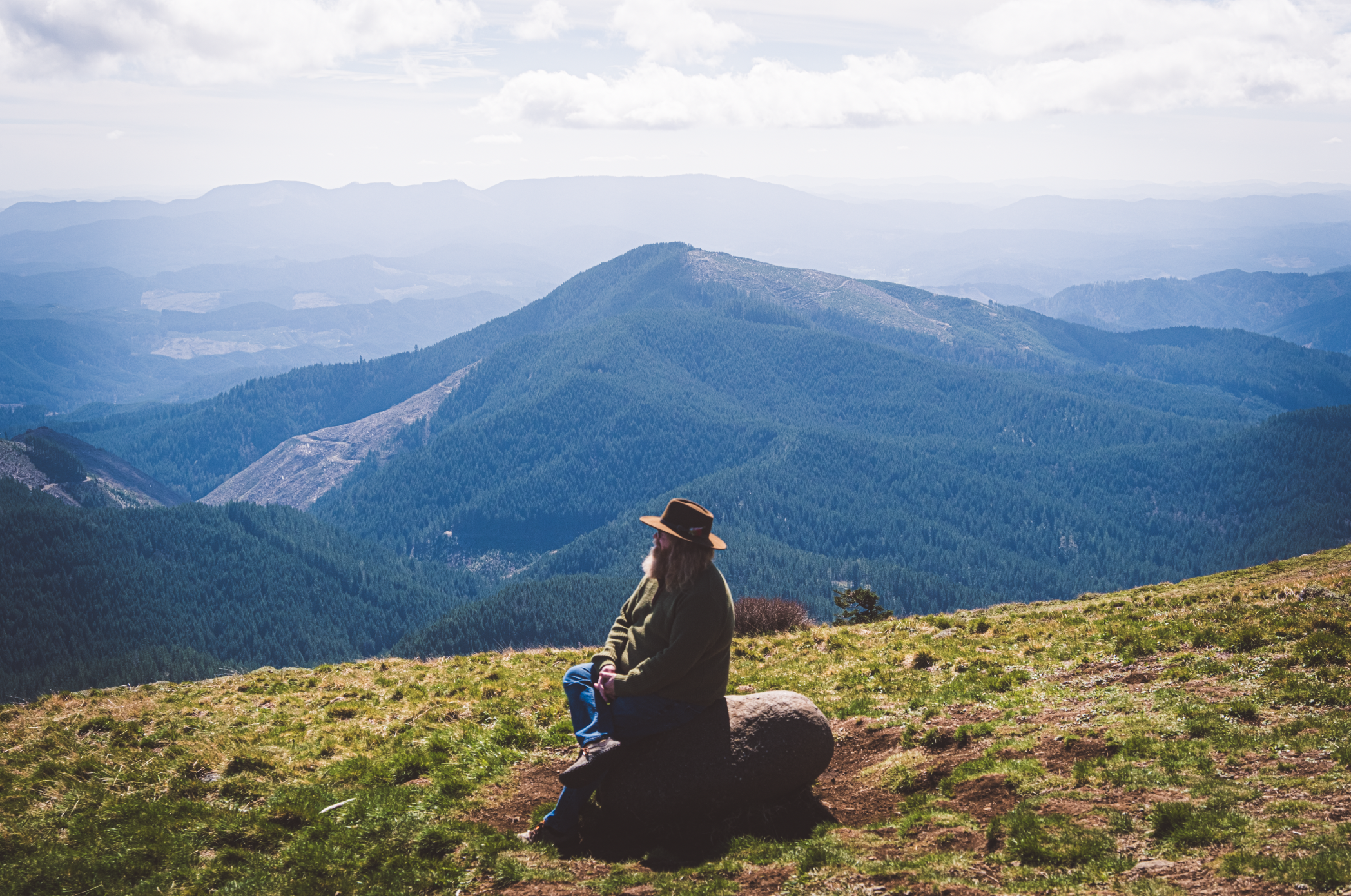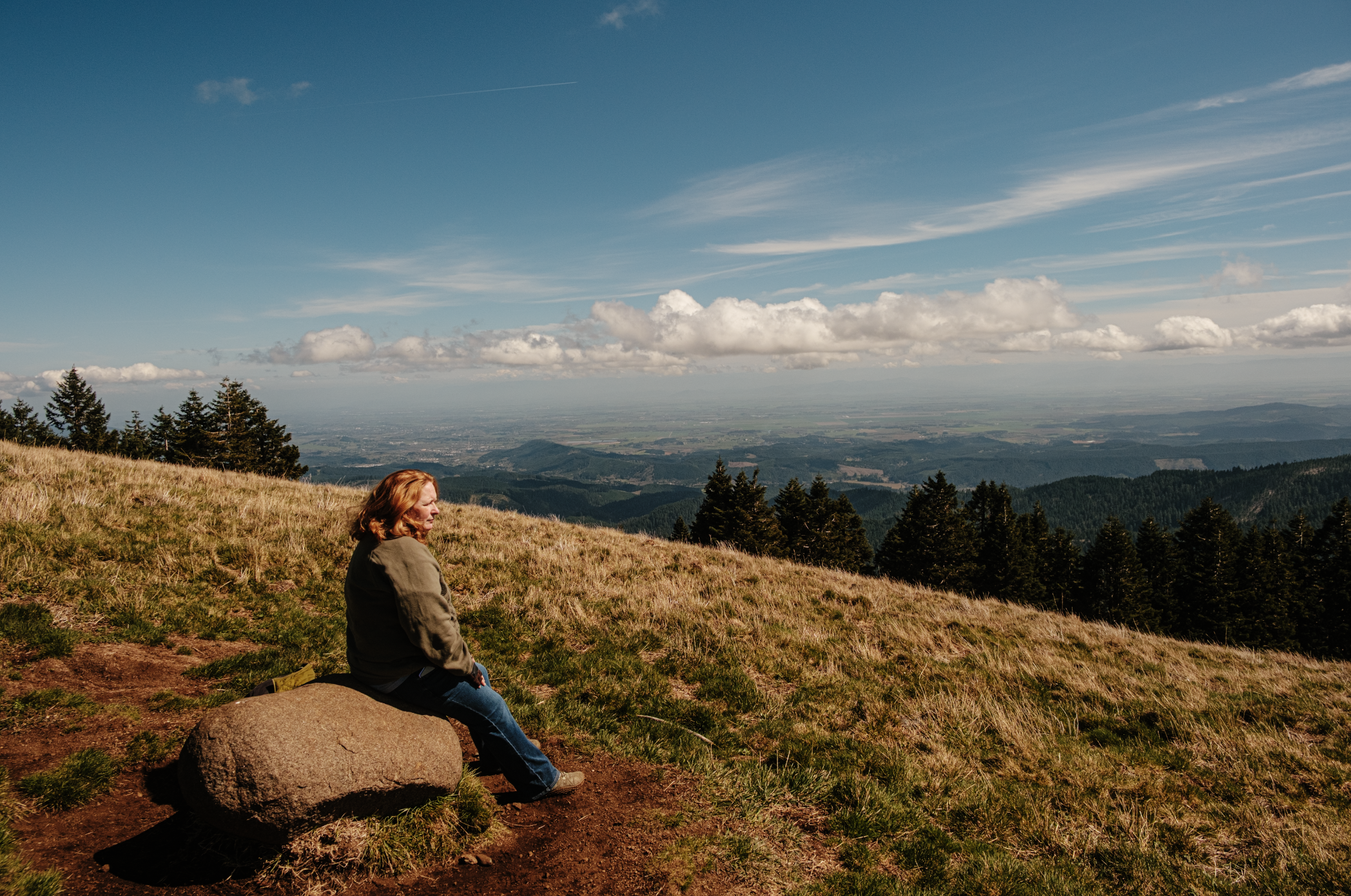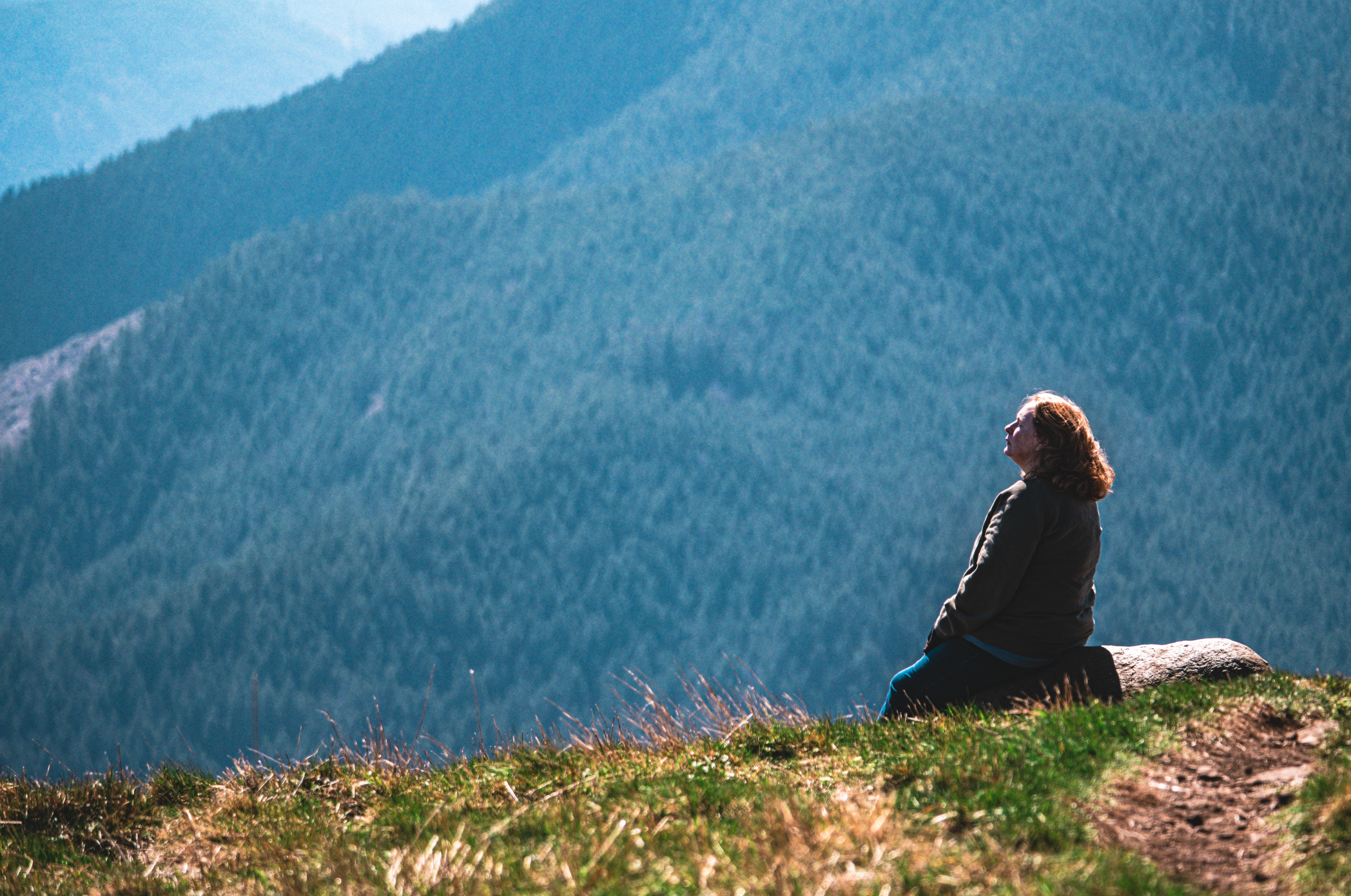

For a few years now we’ve had a standing goal: travel the entire 360-mile length of the Oregon Coast, every stretch of it, from the California line to the mouth of the Columbia. The missing piece was the very top corner, so we booked a weekend in Astoria, timed it to the Scandinavian Midsummer Festival, and went up to finish the job.
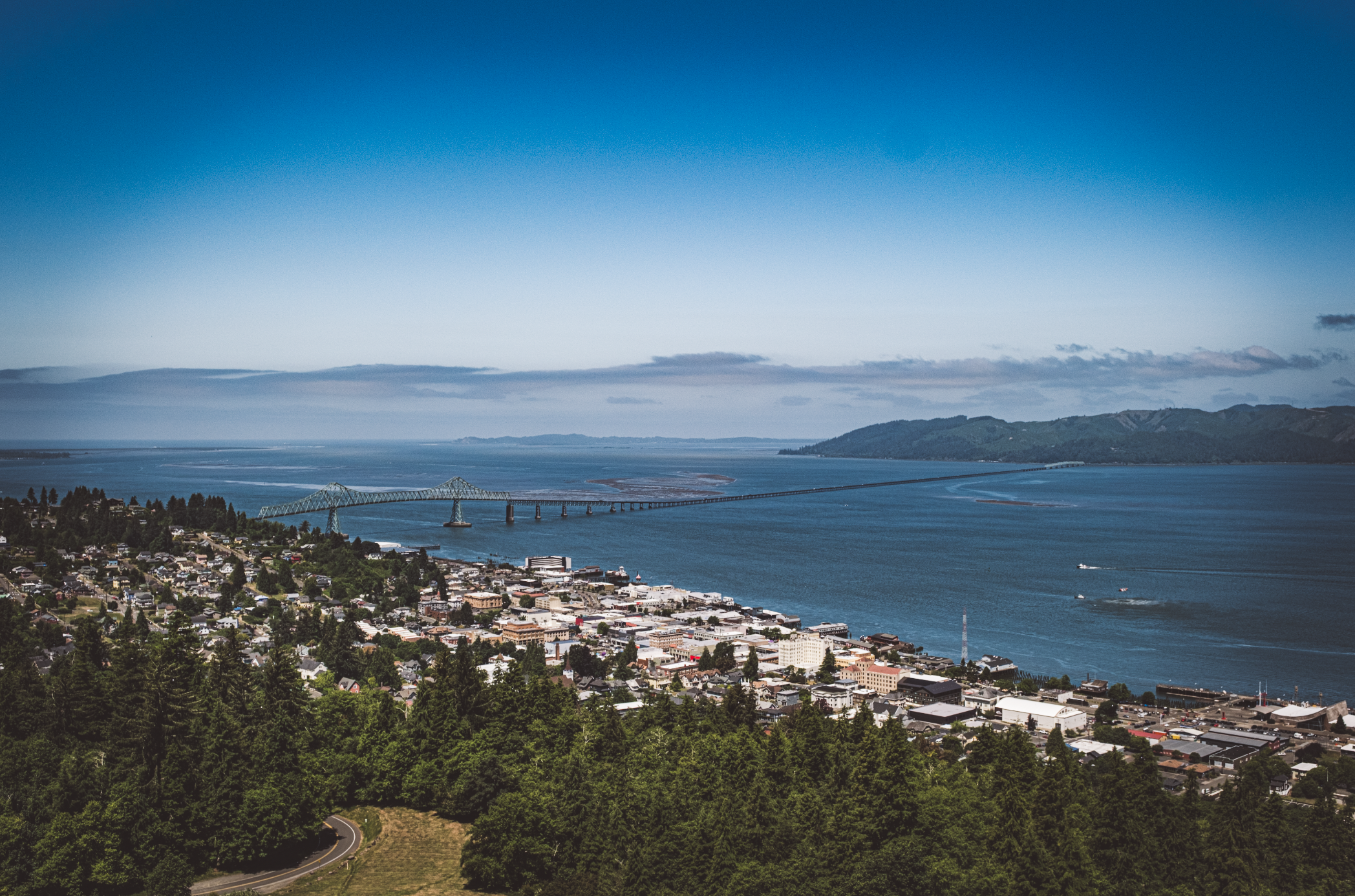
Home base was the Hotel Elliott, a 1920s hotel in the middle of downtown that has been restored with its character intact. Our room had a fireplace and heated stone floors in the bathroom, which sounds like a small thing until you step onto them at six in the morning. The real prize is the rooftop terrace. You can head up there in the evening and watch the light change over the Columbia with the bridge stretched across the whole view. We kept finding excuses to go back up.
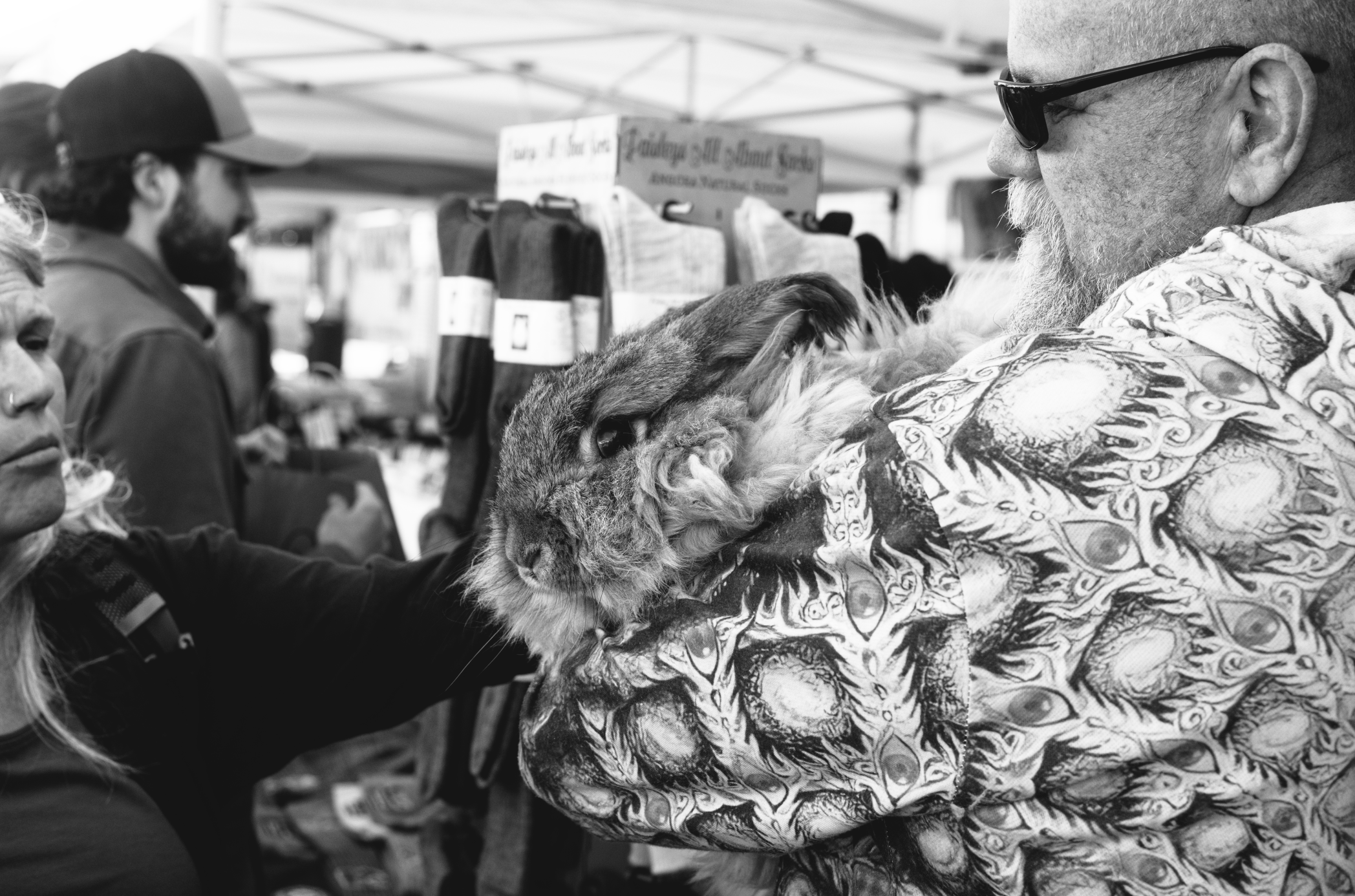
The festival was the anchor of the weekend. Astoria’s Scandinavian roots go back to the fishing and cannery days, when the town was full of Finns, Norwegians, Swedes, and Danes, and every June the Scandinavian Midsummer Festival brings all of it back out: folk dancers, the midsummer pole, and more wool, weaving, and baked goods than any two people can properly take in. The find of the trip was a table of handmade knives from Finland. We talked with the maker for a good while and left with a few of them. They’re beautiful tools, the kind of thing you buy once and hand down.
Downtown got a proper wander too. Astoria is a great shopping town in the old sense: used bookstores, antique shops, galleries, and at least one store that defies categorization, all tucked into hundred-year-old storefronts a couple of blocks off the river.
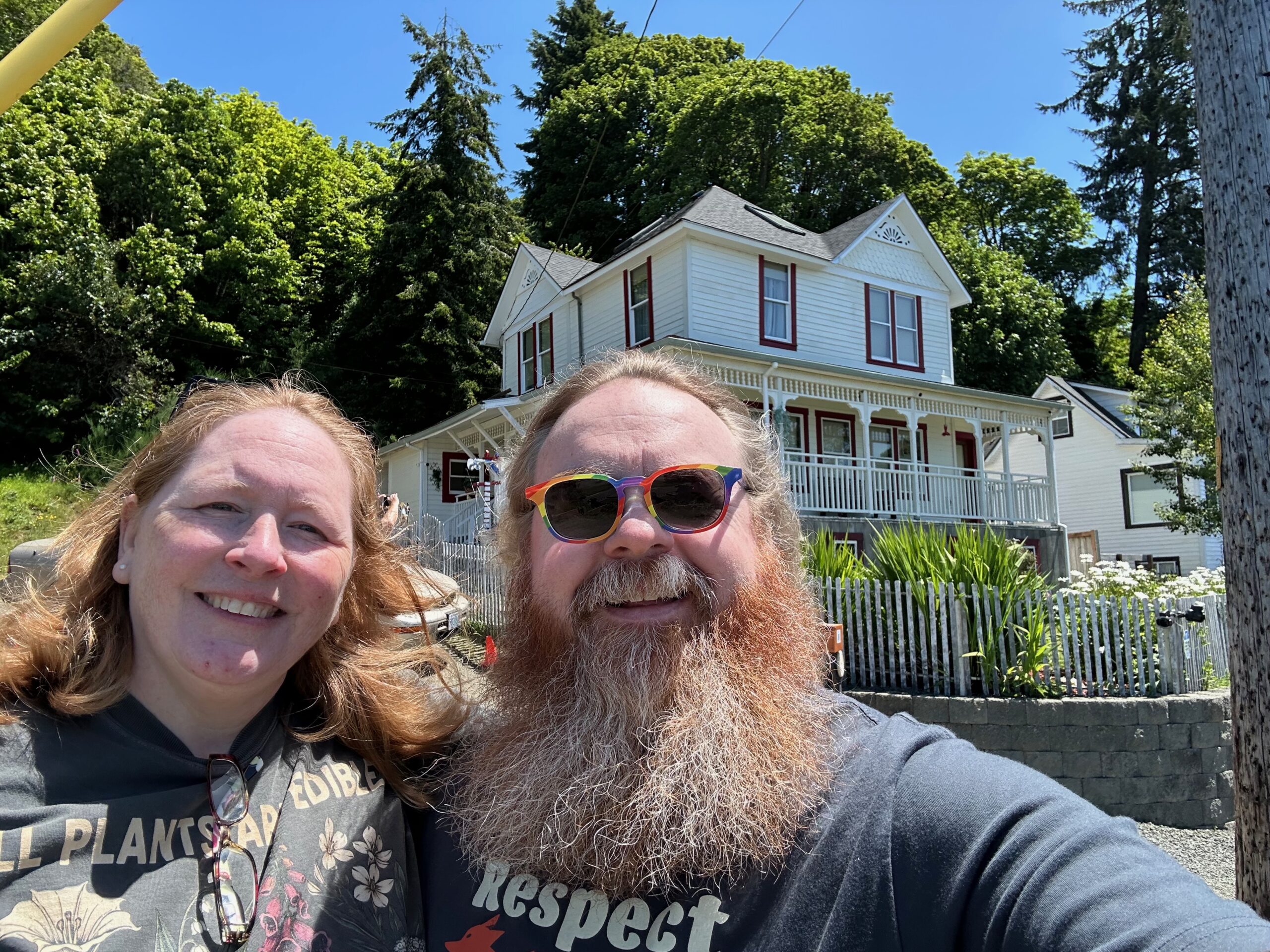
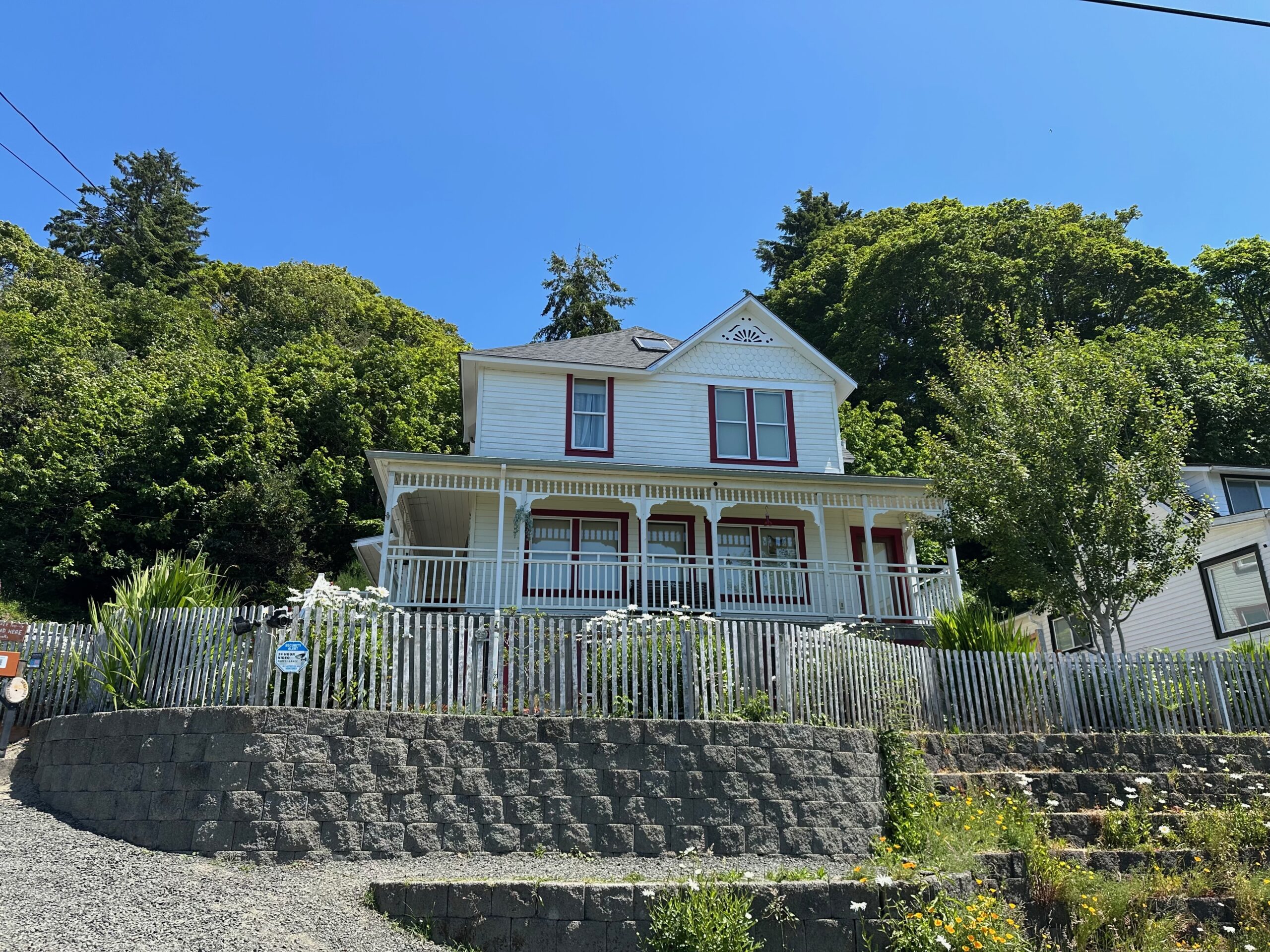
And yes, we made the pilgrimage. The Goonies house sits on the hill above town, still a private home, at the end of a short gravel walk. It’s a strange kind of landmark: an ordinary house that means something to nearly everyone who grew up in the 80s.
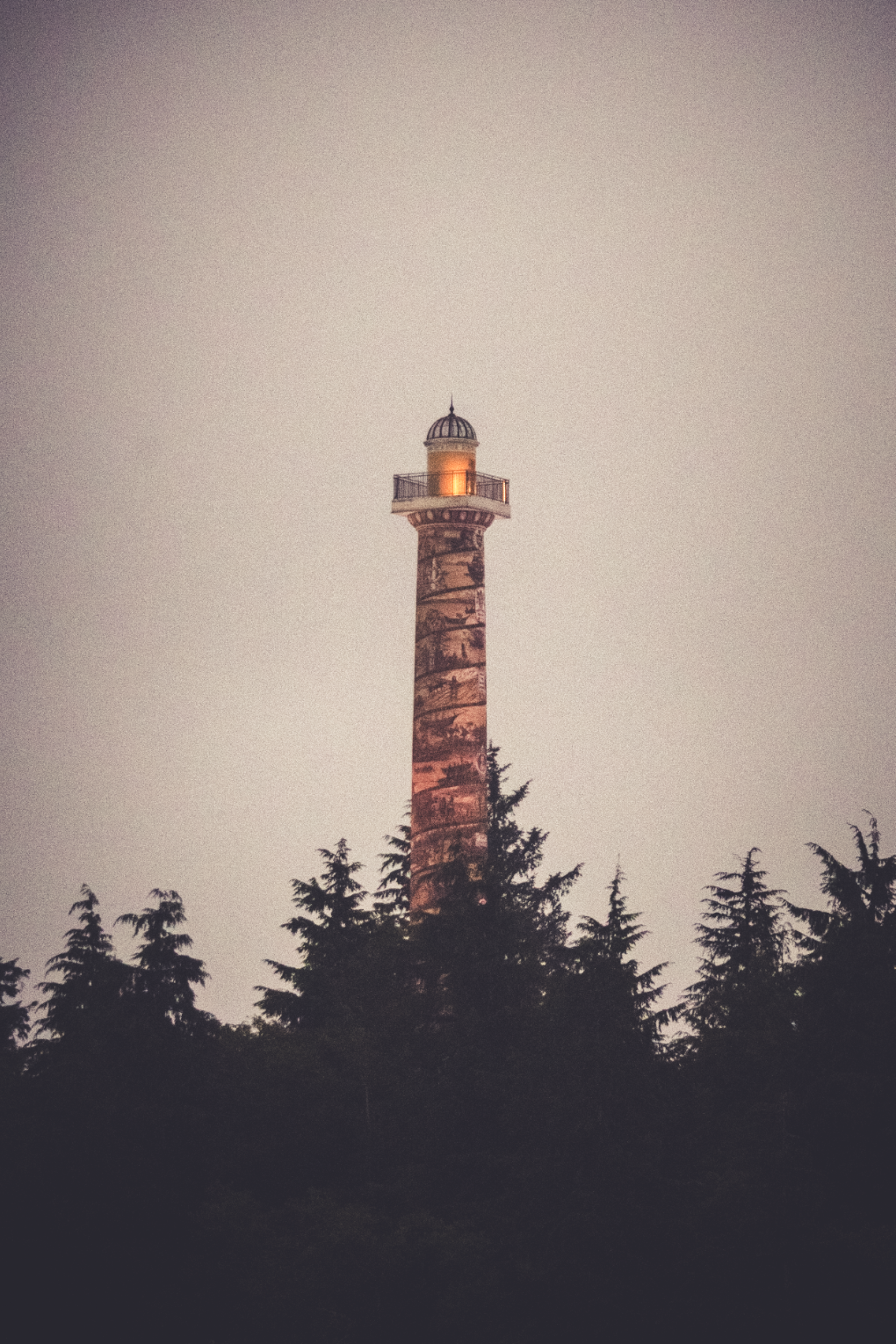
We also climbed the Astoria Column, which turns 100 this year. It stands 125 feet tall on top of Coxcomb Hill, wrapped in a spiral sgraffito mural of Oregon history, with a 164-step spiral staircase inside. I’d like to tell you we bounded up it. We did not. That staircase whooped us thoroughly, and we were sore for days afterward, but the payoff at the top is absurd: the whole mouth of the Columbia, Youngs Bay, Saddle Mountain, the bridge, and the ocean beyond. Kids (and plenty of adults) launch little balsa gliders from the observation deck and watch them ride the wind down the hill.
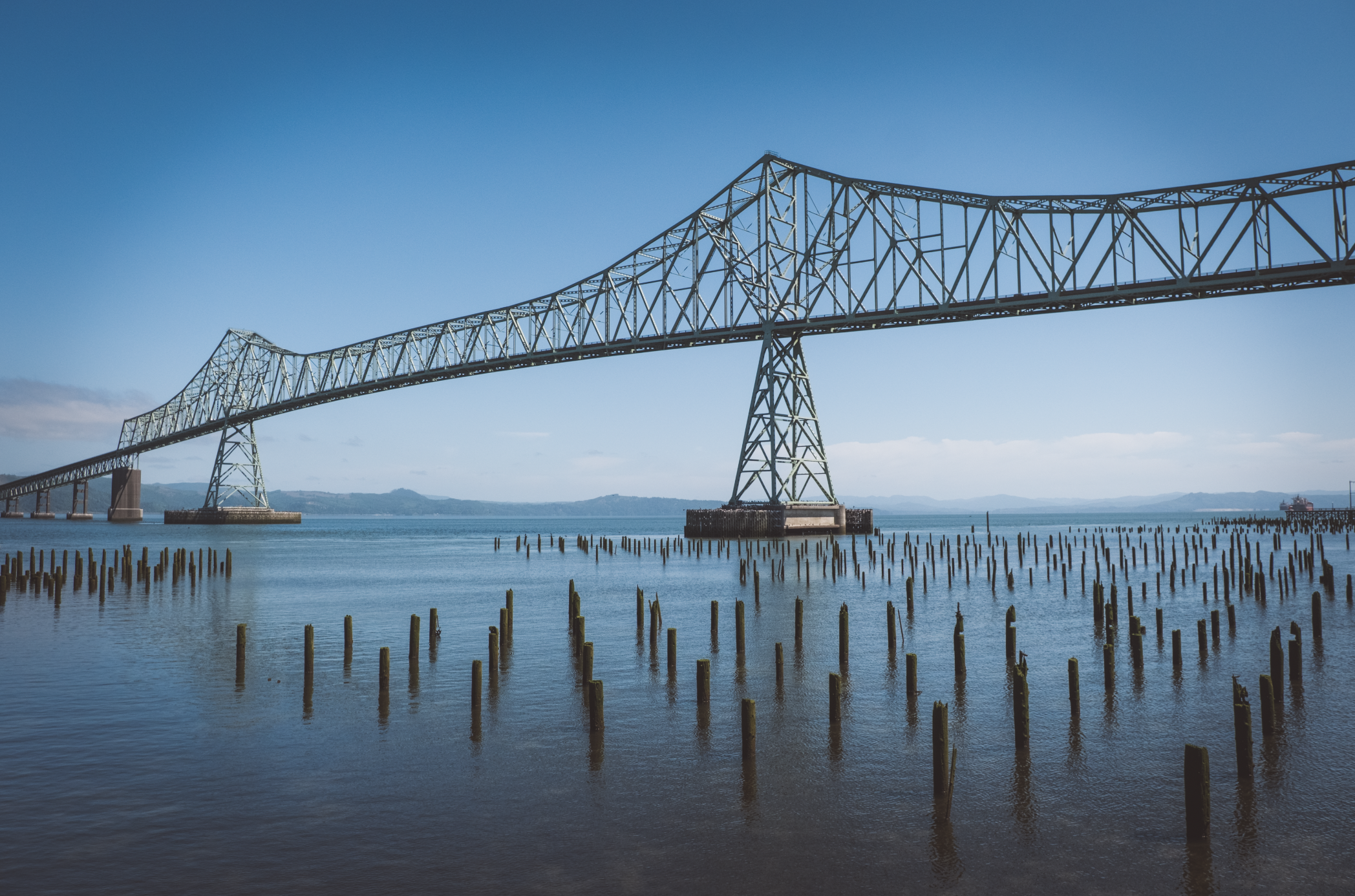
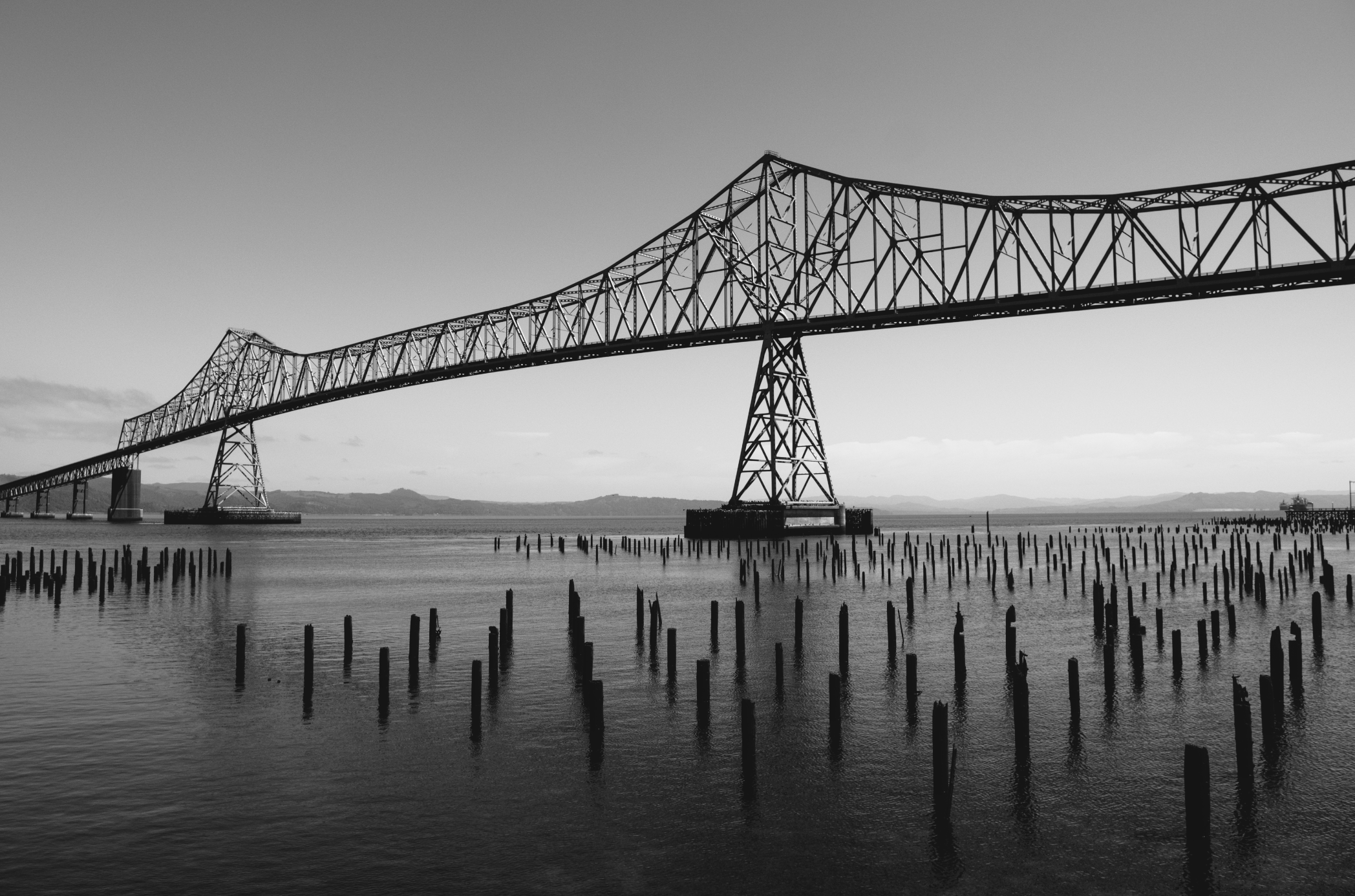
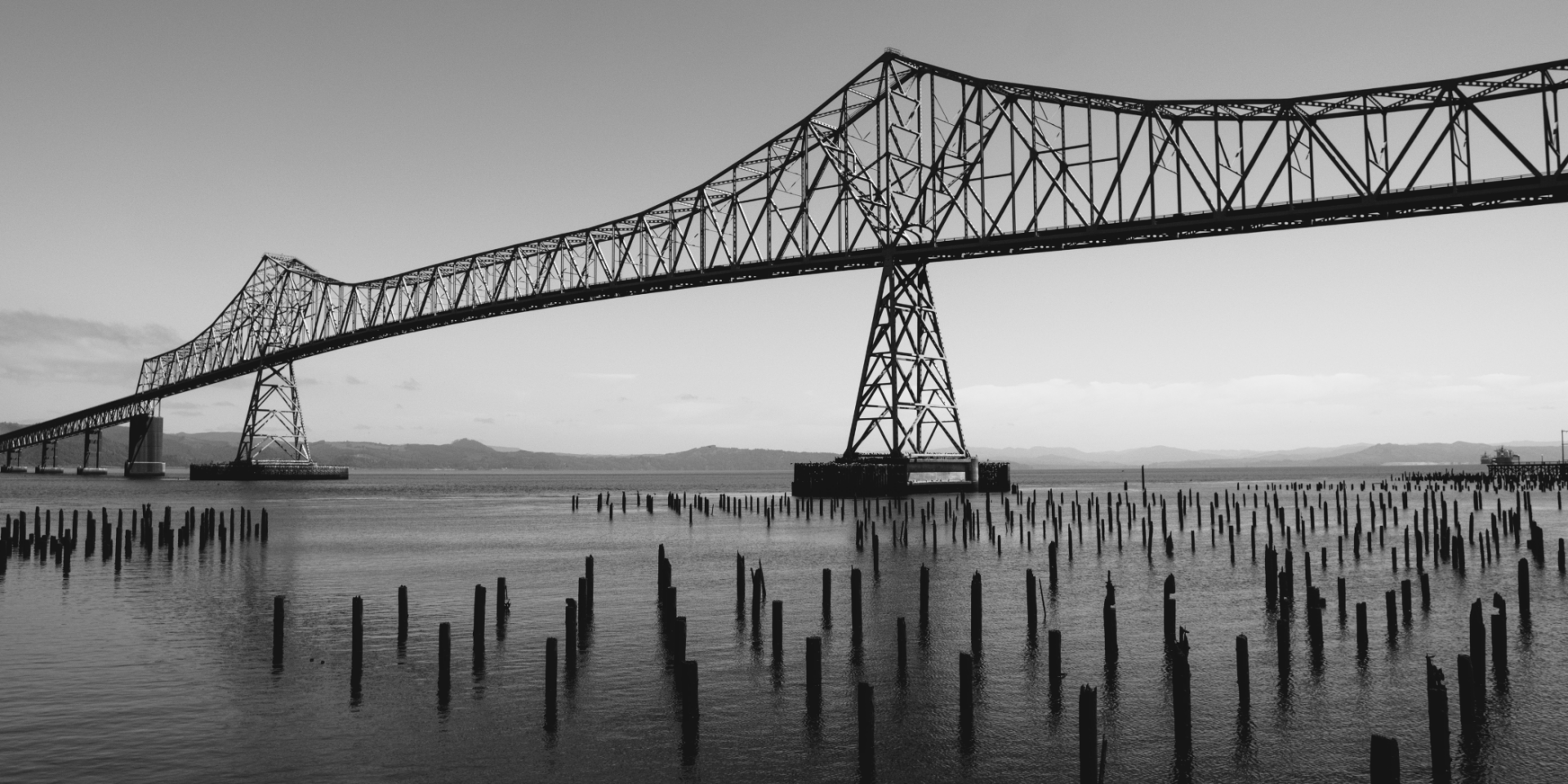
The bridge deserves a paragraph of its own. The Astoria-Megler Bridge is a little over four miles of steel across the mouth of the Columbia, the longest continuous truss bridge in North America. It opened in 1966, was engineered to take 150 mph wind gusts, and rides nearly 200 feet above the shipping channel on the Astoria side before dropping down low for the long run across the water to Washington. Driving it feels less like crossing a bridge and more like taking a short sea voyage in your car.
On the far side we spent an afternoon in Long Beach, Washington, which claims the title of world’s longest beach (28 miles of it) and has the roadside confidence to put that claim on an arch over the street. We poked through the shops, went to a very interesting oddities museum, and had fish & chips.
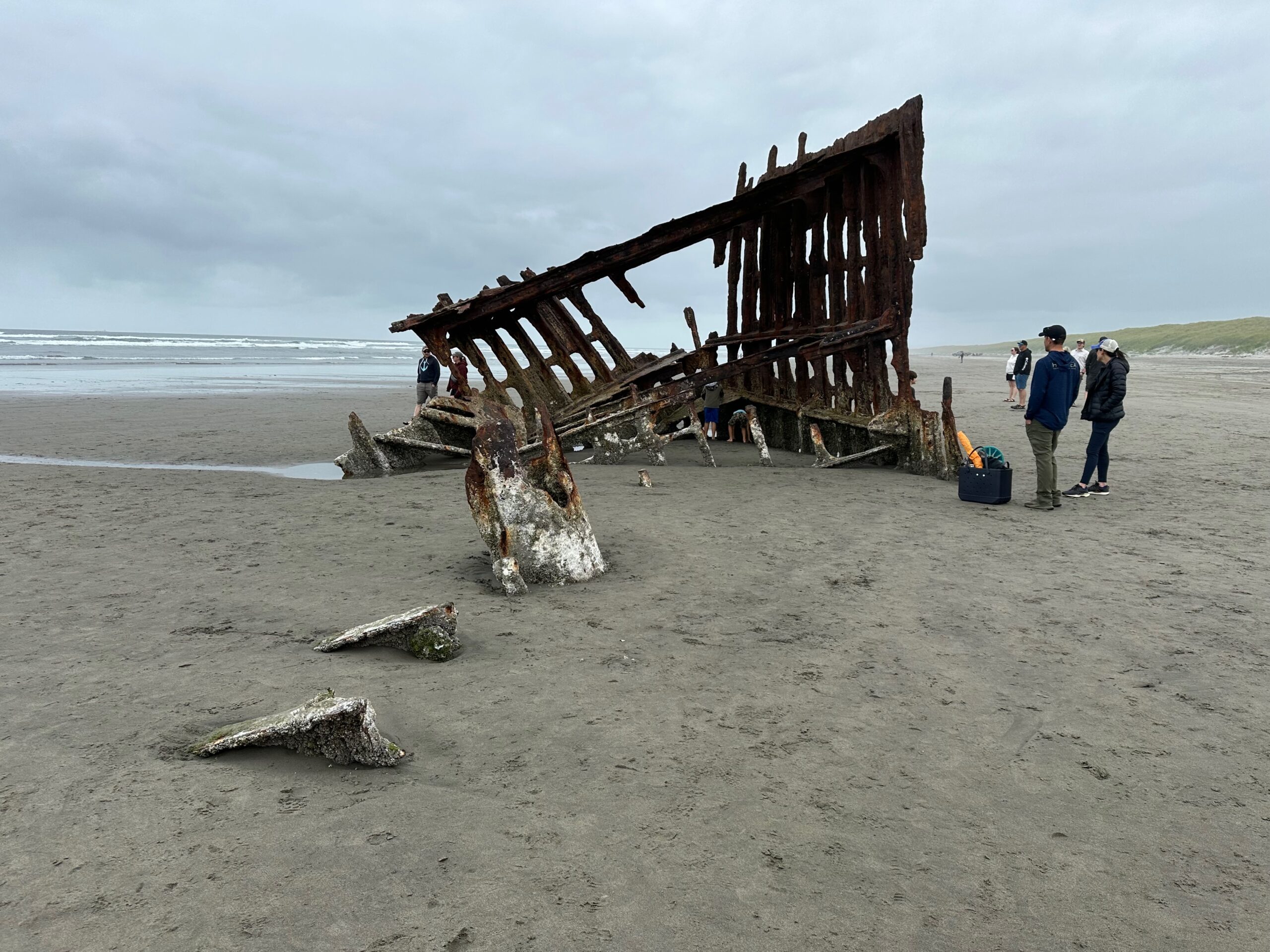
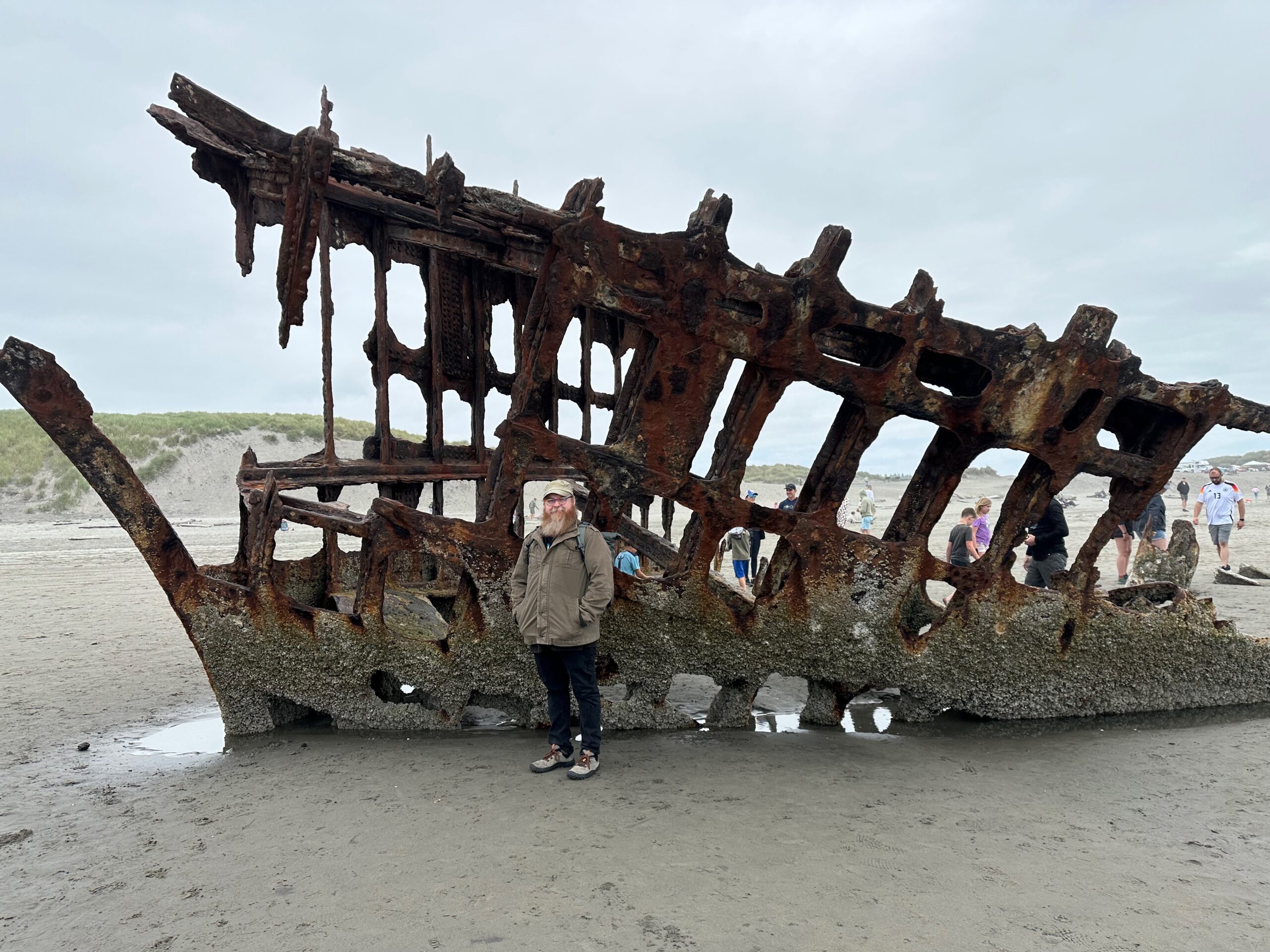
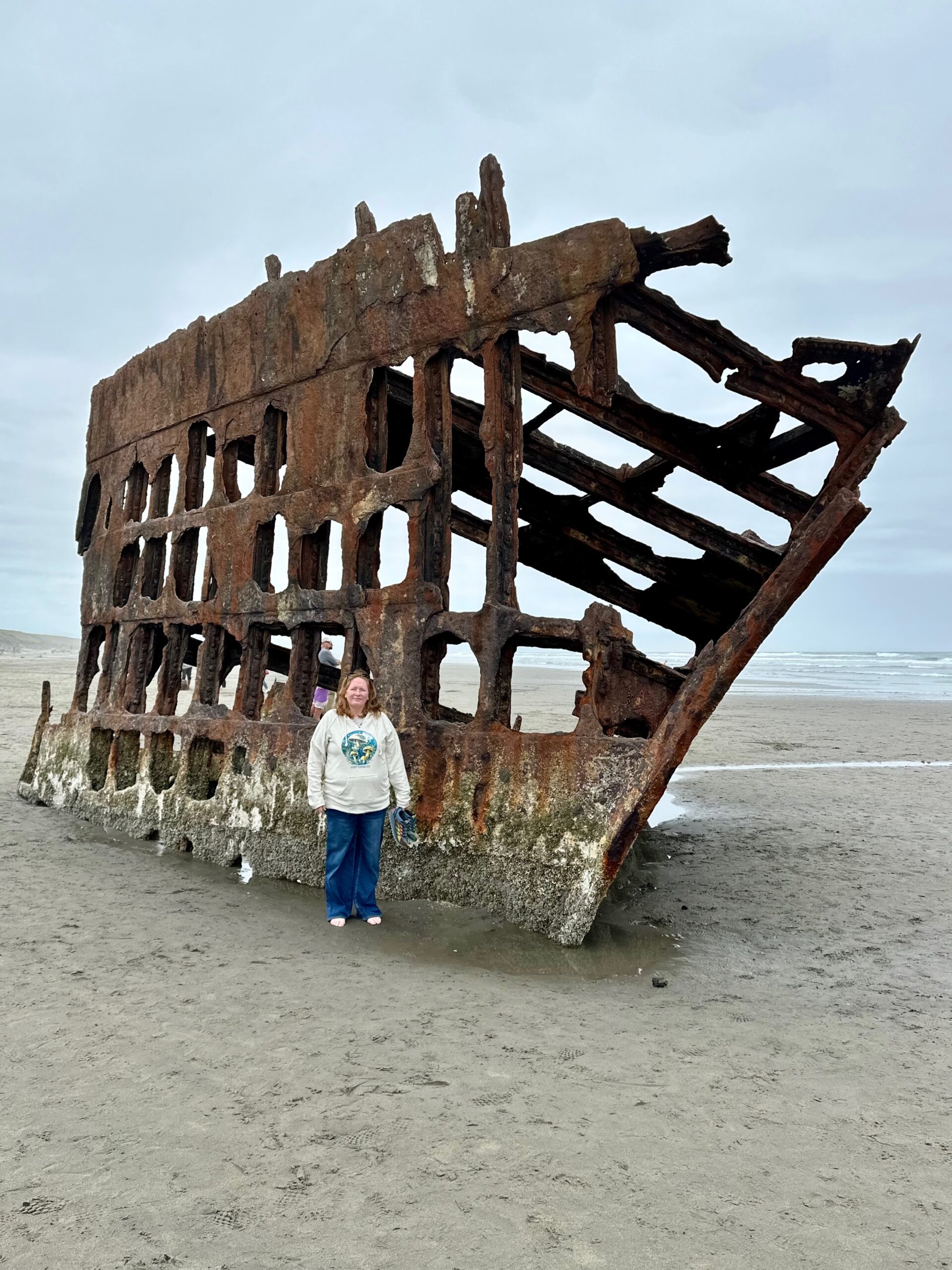
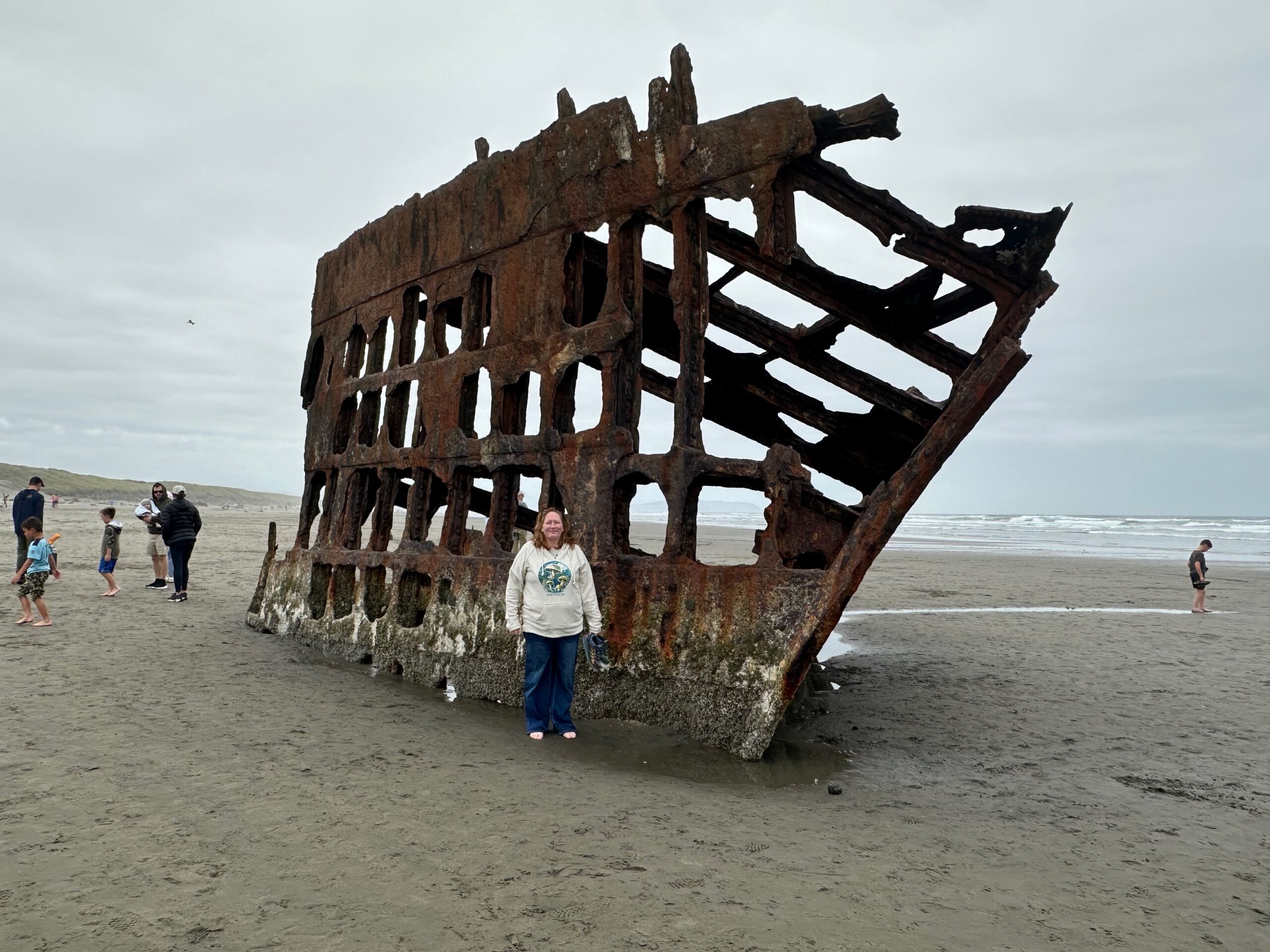
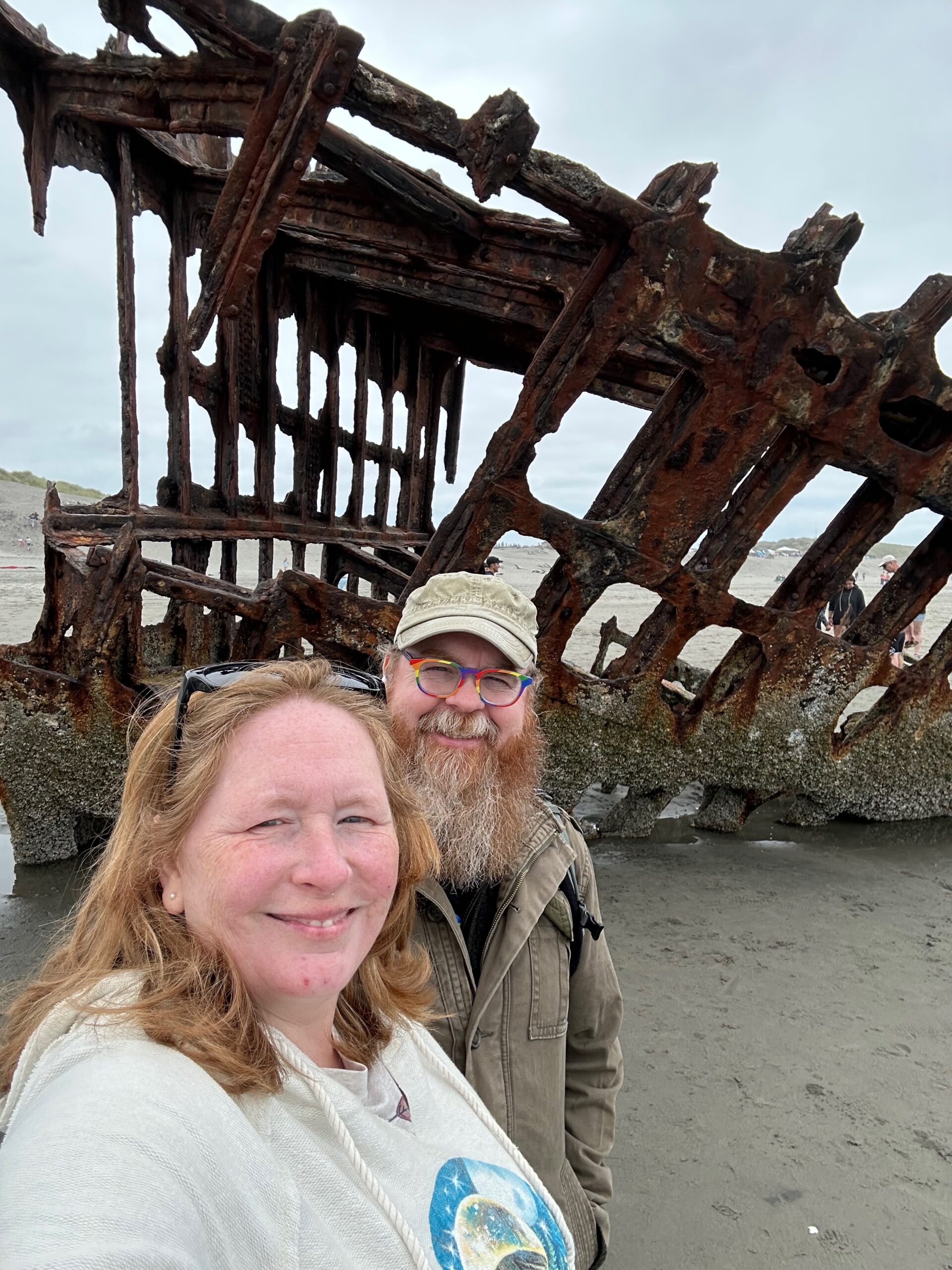
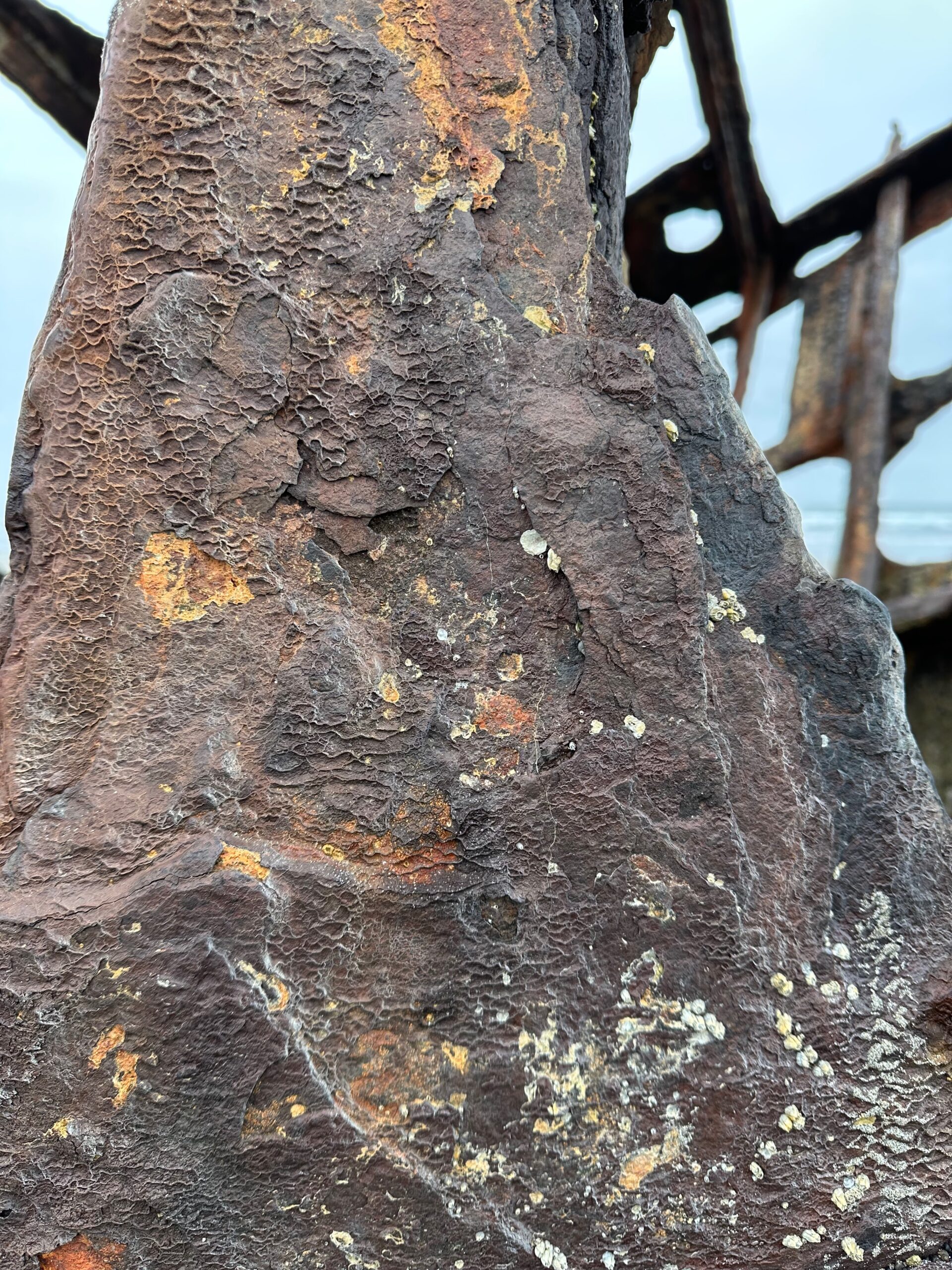
On our last day there, we stopped at Fort Stevens to visit the wreck of the Peter Iredale, a four-masted steel barque that ran aground in October 1906 while trying to enter the Columbia. The whole crew survived, and the captain’s parting toast to his ship was “May God bless you, and may your bones bleach in the sands.” Almost 120 years later, that’s exactly what they’re doing. The rusted bow still juts out of the sand, and at low tide you can walk right up and put a hand on it.
So that’s the whole coast: 360 miles, done. Somehow the list of places we want to go back to is longer than it was when we started, which I suspect is how these goals are supposed to work.